
javier leyva
Horabot’s 2026 Mexican Campaign
While global cybersecurity firms are busy rebranding their images after historic failures and debating whether Mexico belongs in "North America" or "Central America," hackers have already made their decision.
In this first quarter of 2026, a massive spike in Horabot activity has hit the region, with 93% of global infections concentrated in Mexico. This isn’t just a technical glitch; it is a sophisticated "First Strike" against the digital
gateway of North American trade.

Artwork with Gemini 3 Flash / Nano Banana 2
Forget the "Spiders" of the past; the threat of the moment is Horabot. This isn’t just a virus—it’s a modular strike team designed to hijack the very tools we use for daily business.
The "Fake CAPTCHA" Trap
The 2026 iteration of Horabot uses a brilliant and devious social engineering trick. Victims are directed to a "verification" page that looks identical to a standard Google or Cloudflare CAPTCHA. But instead of asking you to select traffic lights, the system instructs you to:
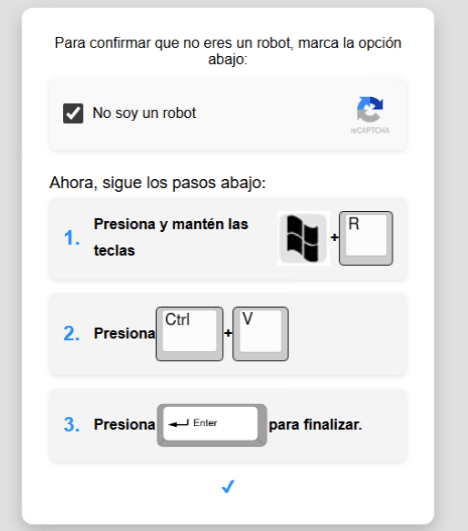
By the time the user realizes they didn't "verify" anything, the malware has already done its work:
- Outlook Hijacking: It uses MAPI automation to send "Confidential Invoices" to every contact in the user’s address book.
- Credential Theft: It scrapes every saved password from Chrome and Edge.
- "Ghost" Mode: It implements server-side polymorphism that changes the file’s signature every time it’s downloaded, leaving traditional antivirus essentially blind.
Actions Today: Protecting the Gateway
If you are managing infrastructure in Mexico today, you cannot afford "tunnel vision." The Horabot spike is real and aggressive.

Pro Tips (Marketing Grade) for Real-World Defense:
Zero-Trust Identity: If your team uses Outlook, implement hardware-based MFA (like YubiKeys) yesterday. Horabot specializes in credential theft; if the password doesn’t work without the physical key, the bot stays out.

The "Purge" of Shadow IT: Ensure your gateways and mail servers are running in clean, isolated environments. If you see unexpected outbound traffic on mail ports (587/465/1587) that doesn't match your user logs, assume you are an unwitting "spreader" for Horabot.

Education is the Perimeter: The "Win + R" trick only works if the user falls for the fake CAPTCHA. Train your team: no legitimate website will ever ask you to paste a command into your system’s execution dialog
Geopolitical "Tunnel Vision"
There is a glaring disconnect in how the industry views Mexico. A certain global cybersecurity leader—currently attempting a massive "Rebirth" of its image after its own historic infrastructure failure—recently released a report categorizing Mexico as part of Central America, citing "indigenous ties" and "sociocultural factors."
The Reality of the Data:
- Trade Dominance: Mexico moves more trade with the USA and Canada than the rest of the Americas combined.
- Human Connectivity: Mexico hosts the largest population of American immigrants (who fancy themselves as "expats") in the world.
- The Indigenous Argument: The report claims indigenous history links Mexico to the south. However, those same indigenous roots span the entire continent. If ancestry is the metric, digital borders should be fluid from the Arctic to Tierra del Fuego.
By shoving Mexico into a "Central American" bucket, Big Tech ignores the massive digital infrastructure that makes the country the most lucrative—and vulnerable—target for hackers that don't care about borders into the US and Canadian markets.
For a company that boasts of understanding global risk flows, CrowdStrike seems to know nothing about what truly motivates people. If Mexico were the "annex of Central America" they try to portray it to be, human migration patterns would tell a different story.
The Killing Fact:
The busiest international air route from the airport of Toronto (YYZ)—the financial heart of Canada— is not to the Florida of American retirees, nor to the skyscrapers of New York. It's towards the Riviera Maya, Mexico. 🇲🇽🇨🇦
It seems that, while CrowdStrike tries to redraw the map from an office in California, Canadians have already voted with their suitcases: they prefer to inhabit the real North American corridor, the one that ignores the artificial borders of security reports.
A nice...If CrowdStrike managed air routes with the same precision with which it draws its geopolitical maps, we'd probably all end up landing in the wrong country... or worse, with a"Blue Screen of Death"just before reaching the beach.
https://securelist.com/horabot-campaign/119033/
https://blog.talosintelligence.com/new-horabot-targets-americas/